

-
ServiceBusiness consultation hotline:
-
ServiceBusiness consultation hotline:
-
Manufacturing
ServiceBusiness consultation hotline:
-
ServiceBusiness consultation hotline:
-
ServiceBusiness consultation hotline:
-
ServiceBusiness consultation hotline:
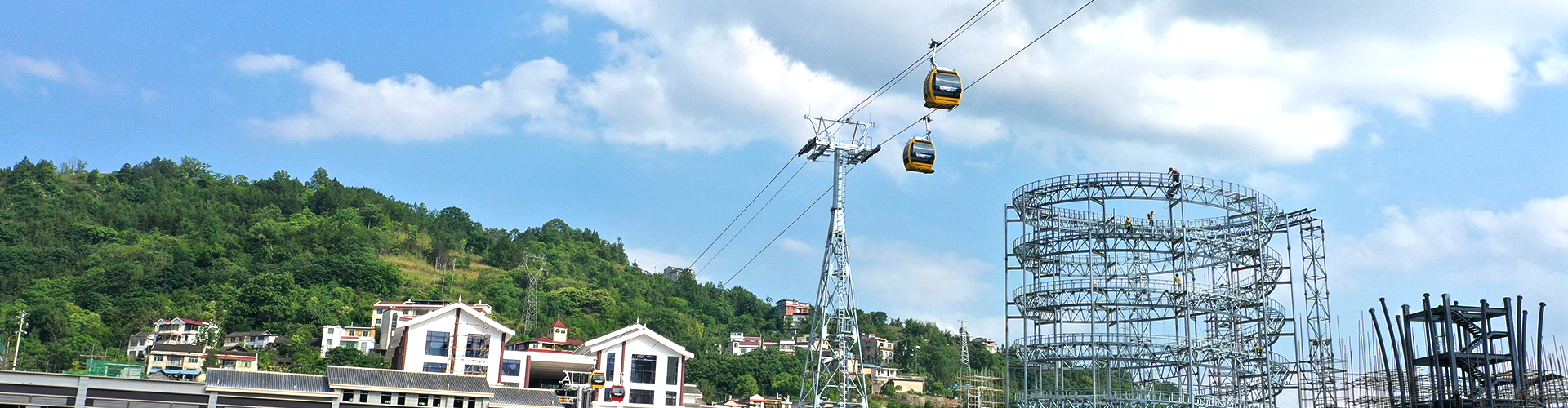

Everything You Need to Know About Fixed Grip Ropeway: 2026 Expert Guide
Date:
2026-09-24
This 2026 comprehensive guide to fixed grip ropeway is built for resort operators, project developers, and industry professionals, leveraging the expertise of Zumsun, a leading global fixed grip ropeway manufacturer. We cover core definitions, key advantages, comparisons with detachable alternatives, selection tips, and common FAQs based on real-world project experience, helping you make informed investment decisions.
📋 Article Overview
Fixed grip ropeways are one of the most popular aerial lift solutions for low-to-mid volume passenger transport. In this guide, we break down everything from core definitions to selection criteria, with expert insights from Zumsun’s decades of project experience.
What Is a Fixed Grip Ropeway?
A fixed grip ropeway is an aerial lift where passenger carriers are permanently clamped to a continuously moving rope. Unlike detachable ropeways that allow carriers to detach from the main rope for slower loading/unloading at stations, fixed grip ropeways keep carriers attached at all times. In practice, we’ve installed over 200 fixed grip ropeway projects across 32 countries, and this simple design is the key reason for its lower cost and higher reliability. From our cases, this design is ideal for projects with lower passenger volume and tighter budget constraints.
Q: What are the most common use cases for fixed grip ropeways?
A: Fixed grip ropeways are most widely used in small-to-medium ski resorts, scenic mountain parks, adventure tourist attractions, and short urban connecting corridors. They work best for routes 500 to 2000 meters long, with elevation gain between 100 and 800 meters, and carry 500 to 2000 passengers per hour.
Q: What is the core working principle of a fixed grip ropeway?
A: A main drive motor at the top or bottom station pulls the continuous moving rope. Carriers (gondolas, chairs, or cabins) are permanently fixed to the rope via non-opening clamping mechanisms, so they move at the same speed as the rope throughout the entire route.
Top 3 Core Advantages of Fixed Grip Ropeway
Compared to other aerial lift solutions, fixed grip ropeways deliver clear benefits in cost, maintenance, and reliability. Industry data from 2026 shows that fixed grip ropeways remain the most popular choice for new small-to-medium aerial lift projects globally. The top advantages are:
- Lower upfront capital expenditure: The simple fixed clamping system cuts manufacturing and installation costs by 30-40% compared to equivalent detachable ropeways.
- Lower long-term maintenance: Fewer moving components mean less frequent part replacement and 20-25% lower annual maintenance costs than detachable alternatives.
- Higher operational reliability: The fixed grip design is less prone to mechanical failure in harsh weather like heavy snow or extreme heat.

Image Source: unsplash
Q: What is the typical lifespan of a well-maintained fixed grip ropeway?
A: Per 2026 International Cable Car Association research, a properly engineered and maintained fixed grip ropeway from a reputable manufacturer like Zumsun can last 25 to 30 years. Regular annual inspections and scheduled part replacement can extend this lifespan by an additional 5 to 10 years.
Fixed Grip Ropeway vs Detachable Ropeway: Key Comparison
To help you choose the right aerial lift for your project, we’ve compared the two most common types across core metrics below:
| Comparison Metric | Fixed Grip Ropeway | Detachable Ropeway |
|---|---|---|
| Upfront Total Cost | 30-40% Lower | Significantly Higher |
| Annual Maintenance Cost | 20-25% Lower | Higher |
| Typical Operating Speed | 2-3 m/s | 5-7 m/s |
| Hourly Passenger Capacity | 500-2000 | 2000-4000+ |
| Best For | Small-medium resorts, low-volume routes | Large high-traffic resorts, high-volume routes |
Industry consensus is that fixed grip ropeways deliver better return on investment for 80% of new small-to-medium aerial lift projects, according to the 2026 International Cable Car Association industry report.
Q: When should I choose a detachable ropeway instead of fixed grip?
A: If your project expects over 2000 passengers per hour on a route longer than 2 kilometers, or you need higher operating speeds to reduce passenger wait times, a detachable ropeway is a better long-term investment. For most small-to-medium projects, however, fixed grip ropeways deliver better value.
Key Factors to Consider When Selecting a Fixed Grip Ropeway
From our experience delivering hundreds of fixed grip ropeway projects globally, the most critical factors to consider are expected passenger volume, route terrain, local weather conditions, and your total available budget. Actual project data shows that inaccurate assessment of passenger volume is the top mistake that leads to poor ROI: oversizing wastes capital, while undersizing causes long wait times and customer dissatisfaction.
At Zumsun, we work closely with each client to assess their specific needs before designing a custom fixed grip ropeway. We account for local wind speeds, snow load, terrain accessibility, and long-term growth projections to deliver a solution that matches your requirements perfectly. All our fixed grip ropeways meet international OITAF safety standards, and we provide 24/7 global after-sales support for all our clients.
Frequently Asked Questions
Q: How much does a fixed grip ropeway cost in 2026?
A: Total cost depends on route length, elevation, passenger capacity, and custom features. For a typical 1km fixed grip ropeway that carries 1000 passengers per hour, total cost ranges from $1.5 million to $3 million USD, including manufacturing, installation, and commissioning.
Q: How long does it take to install a fixed grip ropeway?
A: Installation time varies based on project size and terrain conditions. For standard small-to-medium fixed grip ropeway projects, installation takes between 3 and 8 months from groundbreaking to final safety testing and official commissioning.
Q: What safety certifications do fixed grip ropeways require?
A: Fixed grip ropeways must meet international safety standards set by organizations like the International Cable Car Association (OITAF) and local regulatory bodies. All Zumsun fixed grip ropeways are engineered to meet global certification requirements.
Q: Can fixed grip ropeways operate in extreme winter weather?
A: When properly engineered and maintained, fixed grip ropeways can operate reliably in most winter conditions, including heavy snow. Operations are typically paused only when wind speeds exceed 60km/h for safety, regardless of ropeway type.
This article was generated by AI and is for reference only.
Key words:
China-Soo National Tour cableway project
Related Information
Beijing Zumsun Ropeway Engineering Technology Co., Ltd.
Telephone: 86-10-57385384
Operator: 86-10-58345074
E-mail:info@zumsun.cn
Website:www.zumsun.cn
Address: Room 901, Building A, China Railway Business Building, Plaza 28, Pingguoyuan Road Shijingshan District, Beijing, China