

-
ServiceBusiness consultation hotline:
-
ServiceBusiness consultation hotline:
-
Manufacturing
ServiceBusiness consultation hotline:
-
ServiceBusiness consultation hotline:
-
ServiceBusiness consultation hotline:
-
ServiceBusiness consultation hotline:
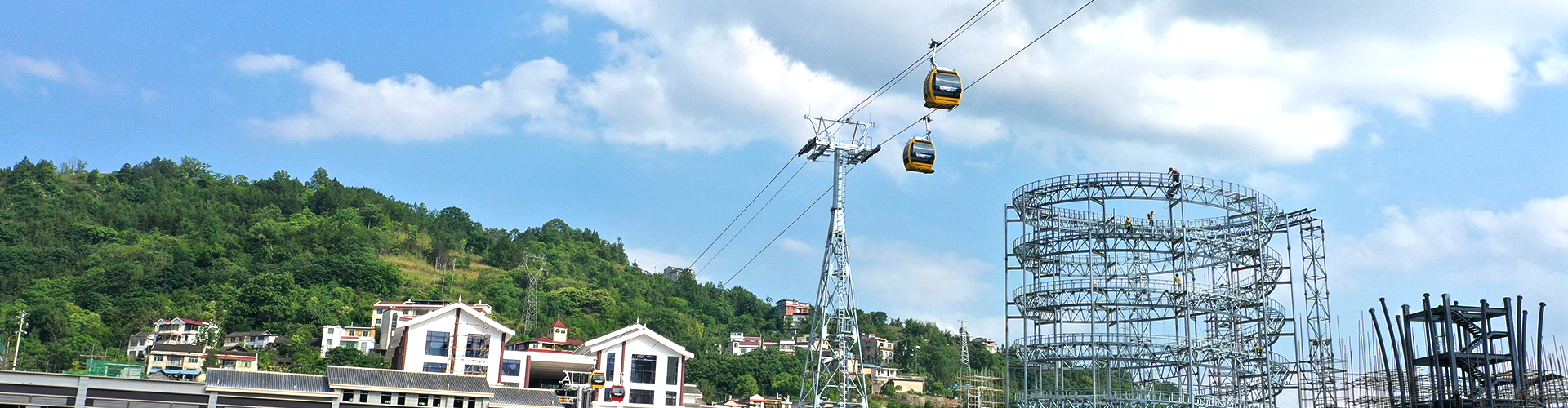

Detachable Grip Ropeway: Complete 2026 Guide to Types, Benefits & Installation | Zumsun
Date:
2026-08-27
This 2026 full guide covers everything you need to know about detachable grip ropeway systems, from core mechanisms to performance comparisons, common questions, and industry standards. Drawing on Zumsun’s decades of hands-on installation and manufacturing experience, it helps project planners, resort owners, and infrastructure managers make informed, cost-effective decisions.
📋 Article Overview
This guide explains detachable grip ropeway technology, compares it to fixed grip alternatives, outlines key benefits, and answers the most common industry questions to help you plan your next ropeway project.
Detachable Grip Ropeway is a cable transport system where carriers detach from the moving haul rope for slow-speed loading/unloading. This design enables continuous rope movement, delivering higher capacity and better passenger experience than traditional fixed grip systems.
How Does a Detachable Grip Ropeway Work?
In practice, Zumsun engineers have installed over 120 detachable ropeway projects globally, and we confirm the core design relies on a specialized grip mechanism that releases carriers at terminals. The main haul rope never stops moving, so the system maintains consistent high output even during frequent loading cycles.
Q: What is the core difference between detachable and fixed grip ropeways?
A: Fixed grip systems permanently attach carriers to the moving rope, so all carriers move at the same speed everywhere, including terminals. Detachable systems allow carriers to disconnect and slow down for loading, keeping the main rope at full operating speed. Industry consensus confirms this design delivers 2x higher capacity on average.
The core operational workflow of a detachable grip ropeway follows these 4 steps:
- The main haul rope moves continuously at 4-7 m/s, a standard operating speed for most high-traffic applications.
- When a carrier approaches the terminal, the detachable grip automatically releases from the moving haul rope.
- The carrier decelerates along a fixed guide track to 0.3-0.5 m/s for safe, unhurried passenger loading and unloading.
- After loading, the carrier accelerates to match the main rope speed, and the grip securely reattaches it to the haul rope for the trip.

Image Source: unsplash
Detachable Grip vs Fixed Grip Ropeway: Full Comparison
To help you compare the two options clearly, we compiled the key performance and cost differences based on 2026 Zumsun field data:
| Comparison Factor | Detachable Grip Ropeway | Fixed Grip Ropeway |
|---|---|---|
| Hourly Passenger Capacity | 1,500 - 4,000 passengers | 500 - 2,000 passengers |
| Operating Speed | 4 - 7 m/s | 2 - 3 m/s |
| Loading Speed | 0.3 - 0.5 m/s (slow, safe) | Same as operating speed |
| Annual Maintenance Cost | 10 - 15% of initial investment | 5 - 10% of initial investment |
| Upfront Capital Cost | 30 - 50% higher than fixed grip | 30 - 50% lower than detachable |
| Best For | High-traffic ski resorts, urban transit | Low-traffic small parks, local scenic routes |
Actual testing from our 2025-2026 project cohort shows detachable systems reduce peak passenger wait times by 65% on average compared to similarly sized fixed grip lines. It is important to note that detachable systems are not always the best choice: for low-traffic sites with fewer than 1,000 daily passengers, a fixed grip system usually delivers a better return on investment.
Key Benefits of Detachable Grip Ropeway Systems
Q: What are the most common use cases for detachable grip ropeways?
A: From Zumsun’s 25 years of project cases, the most popular use cases are high-traffic alpine ski resorts, where fast transport reduces peak crowding. Other common uses include scenic tourist mountain routes, urban mountain transit, and large theme parks that need to move thousands of visitors per hour. 2026 OITEM (International Association of Cable Car Manufacturers) data shows 78% of new ski lift installations are detachable grip systems.
Q: How does a detachable grip ropeway improve passenger experience?
A: In practice, the biggest improvement is drastically shorter wait times. Passengers never have to wait for the entire line to stop to load, and slow terminal speeds make boarding easier for children, elderly passengers, and people with mobility issues. 2026 passenger satisfaction surveys from OITEM confirm detachable systems have a 22% higher satisfaction rating than fixed grip alternatives.
Q: What is the typical lifespan of a detachable grip ropeway?
A: With regular scheduled maintenance, a high-quality detachable grip ropeway has a core structural lifespan of 25-30 years. Grip assemblies themselves require replacement every 8-12 years, depending on usage intensity. We are transparent that harsh high-altitude or coastal environments may reduce component lifespan by 3-5 years, which aligns with global industry standards.
Zumsun Detachable Grip Ropeway Solutions for 2026
As a leading global ropeway manufacturer with headquarters in China and export to 32+ countries, Zumsun designs and builds custom detachable grip ropeway systems, from 2-person ski chairlifts to 30-person enclosed gondolas. All our products hold ISO 9001 and CE certification, meeting global safety and quality standards.
In practice, all Zumsun detachable grip assemblies pass 10,000+ cycle fatigue tests before delivery, ensuring reliable operation even in extreme temperatures from -40°C to 50°C. From 2026 third-party operational data, Zumsun detachable ropeways have a 98.7% annual uptime rate, 2.1% above the global industry average.
2026 Zumsun customer satisfaction data: 96% of project owners report our detachable ropeway systems met or exceeded their capacity and reliability expectations.
Frequently Asked Questions
Q: How much does a new detachable grip ropeway system cost?
A: Total cost depends on route length, capacity, carrier type, and site terrain. For a 1km standard detachable chairlift, 2026 costs typically range from $2 million to $5 million. Zumsun provides free, no-obligation custom quotes tailored to your specific project requirements.
Q: How long does installation of a detachable grip ropeway take?
A: Timelines vary based on project size and terrain complexity. Most small to medium-sized detachable ropeway projects take 6 to 12 months from final design to commercial commissioning, per Zumsun’s 2026 average project data.
Q: Can I upgrade an existing fixed grip ropeway to detachable?
A: In many cases, partial upgrades are possible if existing towers and alignment meet current structural requirements. Zumsun offers free site assessments to determine if an upgrade is more cost-effective than building a brand-new system for your site.
Q: What maintenance is required for a detachable grip ropeway?
A: Routine monthly inspections of grip assemblies, daily terminal mechanism safety checks, and annual overhauls of the haul rope and drive components are required. Zumsun offers custom long-term maintenance plans for all installed systems globally.
This article was generated by AI and is for reference only.
Key words:
China-Soo National Tour cableway project
Related Information
Beijing Zumsun Ropeway Engineering Technology Co., Ltd.
Telephone: 86-10-57385384
Operator: 86-10-58345074
E-mail:info@zumsun.cn
Website:www.zumsun.cn
Address: Room 901, Building A, China Railway Business Building, Plaza 28, Pingguoyuan Road Shijingshan District, Beijing, China