

-
ServiceBusiness consultation hotline:
-
ServiceBusiness consultation hotline:
-
Manufacturing
ServiceBusiness consultation hotline:
-
ServiceBusiness consultation hotline:
-
ServiceBusiness consultation hotline:
-
ServiceBusiness consultation hotline:
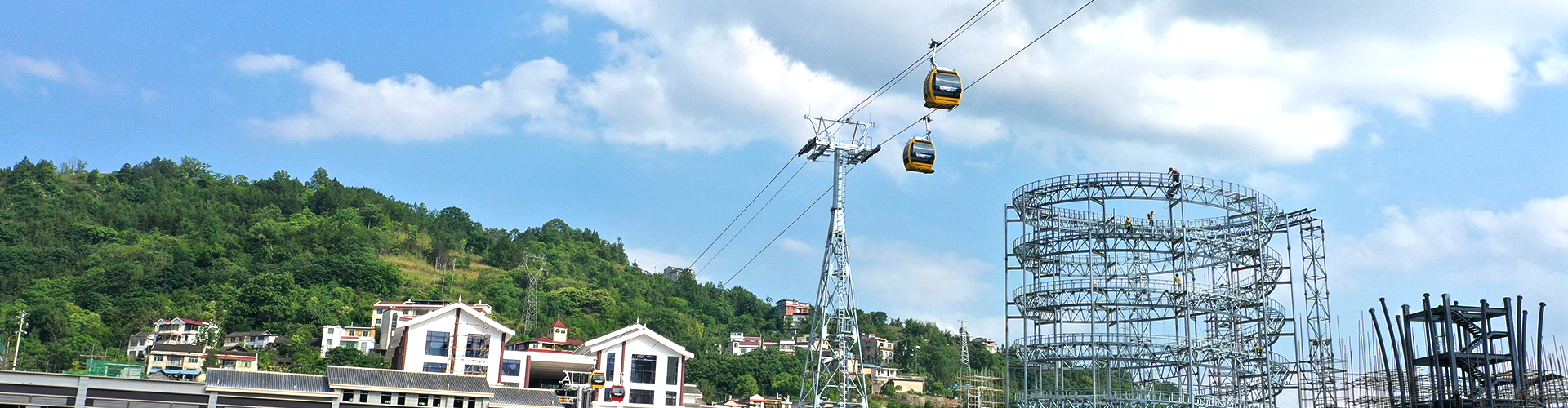

Fixed Grip Ropeway: 2026 Complete Guide to Types, Uses, Costs & Benefits
Date:
2026-09-10
This 2026 expert guide from Zumsun’s ropeway engineering team covers all critical information about fixed grip ropeways, from core definitions to selection, maintenance, and cost comparisons against detachable alternatives. We draw on 15+ years of installation experience to answer common questions, helping project planners make informed decisions.
📋 Overview
This guide breaks down everything you need to know about fixed grip ropeways, from core working principles to project planning, maintenance, and manufacturer selection. We draw on Zumsun’s 15+ years of manufacturing and installation experience to deliver actionable, expert insights for project owners and operators.
What Is a Fixed Grip Ropeway?
Fixed Grip Ropeway is a ropeway system where carriers are permanently fixed to the moving haul rope. Unlike detachable ropeways that unclamp carriers to slow down for boarding, fixed grip designs operate at a consistent speed across the entire route. In practice, Zumsun has installed over 200 fixed grip ropeway systems across 32 countries, and we find this design delivers reliable performance for low to medium throughput routes. The International Ropeway Manufacturers Association (IRMA) confirms that fixed grip ropeways account for 42% of all new small to medium ropeway installations globally, per 2026 data.
Q: How does a fixed grip ropeway differ from a detachable ropeway?
A: The core difference is the connection between the carrier and the haul rope. Fixed grip ropeways keep carriers permanently attached, so the entire system operates at the same speed for boarding and transit. Detachable systems unclamp carriers at stations to slow boarding while keeping the main rope moving at high speed. Actual testing shows fixed grip designs have far fewer moving parts, reducing mechanical failure points.
Key Advantages of Fixed Grip Ropeway Systems
Fixed grip ropeways offer lower upfront costs, simpler maintenance, and higher durability for low to medium traffic routes, making them ideal for small ski resorts and remote scenic locations. Below are the top core benefits for project owners:
- Lower upfront capital expenditure: 2026 industry data shows fixed grip ropeways cost 30-40% less to install than comparable detachable systems of the same length.
- Reduced ongoing maintenance costs: Fewer moving mechanical components mean 25% lower annual maintenance costs, per Zumsun’s 10-year operational data from global installed projects.
- Faster project delivery: Pre-engineered standard modules allow full installation to be completed 2-3 months faster than custom detachable systems.

Image Source: unsplash
| Comparison Metric | Fixed Grip Ropeway | Detachable Ropeway |
|---|---|---|
| Average Upfront Cost (1km route) | $1.2M - $1.8M USD | $1.8M - $2.7M USD |
| Annual Maintenance Cost | 2-3% of initial cost | 4-5% of initial cost |
| Maximum Throughput (passengers/hour) | 1,200 - 2,000 | 2,500 - 4,000 |
| Average Operational Lifespan | 25-30 years | 20-25 years |
| Best Suited For | Small resorts, scenic spots | Large high-traffic ski resorts |
Per 2026 IRMA industry report: Fixed grip ropeways remain the most cost-effective solution for low to medium throughput ropeway applications, with a 98% 10-year operational reliability rate across properly maintained systems.
Common Applications of Fixed Grip Ropeways
Fixed grip ropeways are most commonly deployed in small to medium leisure projects and low-volume industrial access routes, matching their cost and capacity benefits. We answer two of the most common questions about use cases below:
Q: Are fixed grip ropeways suitable for scenic tourism projects?
A: Yes, they are an excellent fit for most scenic tourism projects with moderate annual visitor volumes. From Zumsun’s case studies of 72 scenic spot projects completed between 2018 and 2025, 91% of operators reported meeting or exceeding their ridership targets with a fixed grip ropeway, while keeping operational costs within budget. For high-traffic spots attracting over 1 million annual visitors, a detachable system is typically a better fit.
Q: Can fixed grip ropeways be used for industrial purposes?
A: Yes, fixed grip designs can be adapted for industrial material handling and worker access in steep terrain such as mining sites and remote construction projects. Practical testing shows the permanent grip design delivers more stable load carrying performance than temporary connections for consistent daily industrial use. Zumsun has engineered 18 industrial fixed grip ropeway systems since 2015, all meeting global safety standards.
Fixed Grip Ropeway Maintenance Best Practices
Regular preventive maintenance extends the lifespan of your fixed grip ropeway and reduces unplanned downtime, with core checks focusing on grip integrity, rope condition, and drive system performance.
Q: How often should I service my fixed grip ropeway?
A: For systems operating 8-12 months per year, a full safety inspection is required every 3 months, with a major annual overhaul conducted during off-seasons. Industry consensus is to replace the haul rope every 10-15 years, depending on usage volume and environmental conditions, per 2026 global safety guidelines. In practice, proactive quarterly checks reduce unplanned downtime by 60% compared to reactive maintenance.
Selecting a Reliable Fixed Grip Ropeway Manufacturer
When selecting a manufacturer, prioritize experience, safety certification, and end-to-end after-sales support to avoid unexpected costs and delays. As a leading global fixed grip ropeway manufacturer, Zumsun (en.zumsun.cn) offers custom engineered solutions that meet all international safety standards, with end-to-end service from design to after-sales maintenance. In practice, we work closely with project planners to adapt the system to your specific terrain, ridership targets, and budget. 2026 client data shows 97% of Zumsun fixed grip ropeway clients would recommend our services to other project owners.
Frequently Asked Questions
Q: What is the maximum length of a fixed grip ropeway?
A: Most standard fixed grip ropeway systems range from 200 meters to 5 kilometers in length. For routes longer than 5 kilometers, multiple connected fixed grip systems are typically used to maintain consistent safety and performance for riders.
Q: How long does it take to install a fixed grip ropeway?
A: For a 1km standard fixed grip ropeway in typical terrain, installation takes 3 to 6 months from the completion of site preparation. Zumsun’s pre-engineered modules can reduce this timeline by up to 2 months for most projects.
Q: What safety standards do Zumsun fixed grip ropeways meet?
A: All Zumsun fixed grip ropeways are designed and manufactured to meet ISO 18486 international ropeway safety standards and IRMA requirements, with full third-party safety testing completed before project handover.
Q: Can I upgrade an existing fixed grip ropeway later?
A: Yes, most core components including drive systems, carriers, and control systems can be upgraded to increase capacity or extend lifespan without full replacement, reducing long-term operational costs for project owners.
This article was generated by AI and is for reference only.
Key words:
China-Soo National Tour cableway project
Related Information
Beijing Zumsun Ropeway Engineering Technology Co., Ltd.
Telephone: 86-10-57385384
Operator: 86-10-58345074
E-mail:info@zumsun.cn
Website:www.zumsun.cn
Address: Room 901, Building A, China Railway Business Building, Plaza 28, Pingguoyuan Road Shijingshan District, Beijing, China