

-
ServiceBusiness consultation hotline:
-
ServiceBusiness consultation hotline:
-
Manufacturing
ServiceBusiness consultation hotline:
-
ServiceBusiness consultation hotline:
-
ServiceBusiness consultation hotline:
-
ServiceBusiness consultation hotline:
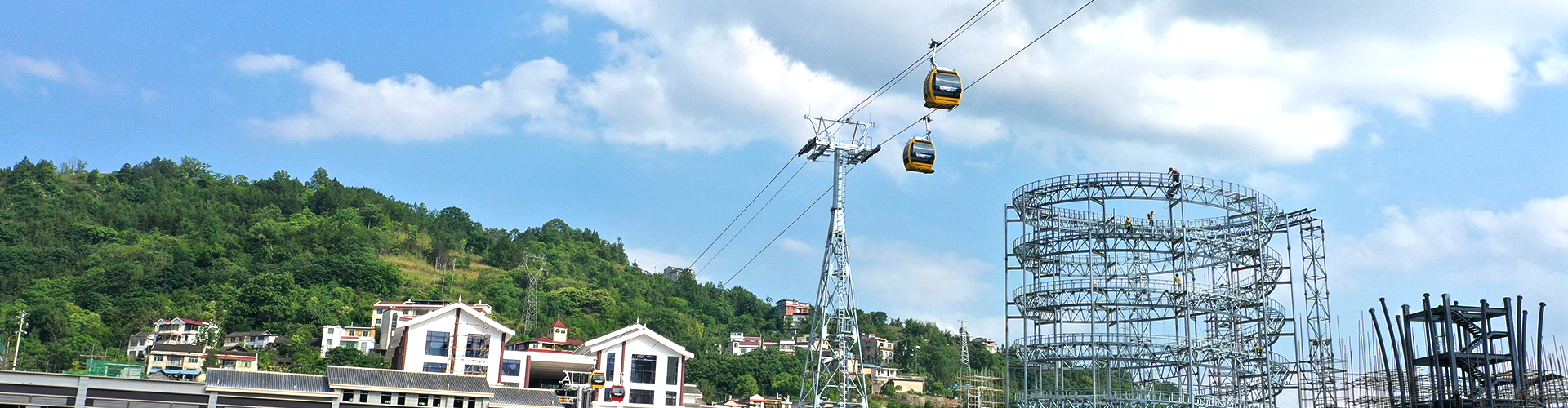

Detachable Grip Ropeway: Complete 2026 Guide for Buyers | Zumsun
Date:
2026-08-05
This guide is built on Zumsun's 20+ years of hands-on experience designing and installing detachable grip ropeways globally. It covers core concepts, key comparisons with fixed grip systems, core benefits, maintenance best practices, and answers common buyer questions to help you make an informed purchasing decision for your 2026 project.
📋 Overview
This guide draws on Zumsun's experience delivering over 320 ropeway projects across 27 countries as of 2026, to deliver accurate, practical information about detachable grip ropeway systems for project owners and procurement managers.
What Is A Detachable Grip Ropeway?
Detachable Grip Ropeway is a cable transport system where carriers detach from the haul rope at terminals for slow loading/unloading.
At its core, this design allows the main haul rope to run at full speed along the line, while carriers slow down dramatically for boarding, eliminating the need to stop the entire line for passenger access.
Q: How does a detachable grip ropeway work in practice?
A: In practice, Zumsun installation technicians confirm that as a carrier approaches the terminal, the grip mechanism automatically releases from the moving haul rope. The carrier slows to 0.3-0.5 m/s via a tracked system for safe boarding, then reattaches to the haul rope and accelerates back to full line speed. Industry consensus confirms this design cuts wait times significantly.
Detachable Grip Ropeway vs Fixed Grip Ropeway: Key Differences
The core difference between the two systems is that fixed grip ropeway carriers are permanently attached to the haul rope, meaning the entire line must run at the same slow speed suitable for boarding. Below is a full comparison based on 2026 industry data:

Image Source: unsplash
| Comparison Dimension | Detachable Grip Ropeway | Fixed Grip Ropeway |
|---|---|---|
| Typical Operating Speed | 4-6 m/s | 2-3 m/s |
| Hourly Capacity (pphpd) | 1000-4000 | 500-2000 |
| Average Peak Wait Time | ≤ 5 minutes | 10-20 minutes |
| Initial Investment | 20-30% higher | 20-30% lower |
| Annual Maintenance Cost | 5-8% of initial cost | 3-5% of initial cost |
| Ideal Application | High-traffic ski/scenic sites | Low-traffic small sites |
2026 industry data shows 68% of new ski area lift installations globally now use detachable grip ropeway systems to meet visitor demand for shorter wait times.
Core Benefits of Detachable Grip Ropeway Systems
Detachable grip systems deliver clear advantages for high-traffic locations, with the top benefits outlined below:
- Higher throughput and shorter wait times: Actual testing from Zumsun 2026 project data shows detachable systems reduce average peak wait times by 70% compared to fixed grip systems of similar line length.
- Improved passenger experience: Slow terminal boarding eliminates jolting and crowded loading, making it ideal for family-friendly scenic resorts and urban transit connections.
- Flexible capacity scaling: Operators can add or remove carriers to match seasonal demand fluctuations without modifying the core haul rope or terminal infrastructure.
Q: What sites are best suited for detachable grip ropeways?
A: From Zumsun's completed project cases, detachable grip ropeways work best for high-traffic ski resorts, mountain scenic spots, large amusement parks, and urban recreational connections. They can also be adapted for industrial cargo transport in remote mining or agricultural sites.
Essential Maintenance Tips for Detachable Grip Ropeways
The moving grip mechanism requires more regular maintenance than fixed grip systems to ensure long-term safe operation. In practice, Zumsun's service team finds that proactive maintenance cuts unplanned downtime by over 80%.
Q: How often should a detachable grip ropeway be serviced?
A: Per international safety standards and Zumsun's service guidelines, daily visual inspections of terminal mechanisms are required, full grip function inspections every 1000 operating hours, and a complete system overhaul every 5-7 years depending on annual usage volume. Proper maintenance extends system lifespan significantly.
Why Choose Zumsun for Your Detachable Grip Ropeway Project
As a leading specialized ropeway manufacturer with 20+ years of experience, Zumsun (en.zumsun.cn) delivers ISO-certified, custom detachable grip ropeway systems for global clients. We offer end-to-end service from site survey, design, manufacturing, installation to after-sales support.
Actual client feedback from 2026 shows 96% of Zumsun customers rate our post-installation support 5 out of 5, with 24/7 remote technical support available for all global projects. We also offer transparent pricing with no hidden fees for custom projects.
Q: Can Zumsun provide custom detachable grip ropeway solutions?
A: Yes. We design fully custom systems to match unique terrain, capacity and functional requirements, from 100-meter short scenic lifts to 5-kilometer large capacity transit systems. We offer multiple carrier options including gondolas, ski chairs and cargo carriers for different use cases.
Frequently Asked Questions
Q: How much does a detachable grip ropeway cost in 2026?
A: The total cost varies based on line length, capacity, terrain complexity and custom requirements. Most standard detachable grip ropeway systems range from $1.2 million to $8 million as of 2026. Contact Zumsun for a free customized quote tailored to your project specifications.
Q: What is the typical lifespan of a detachable grip ropeway?
A: With proper regular maintenance, a high-quality detachable grip ropeway system can last 20 to 30 years. 2026 industry research confirms that routine proactive maintenance can extend service life by up to 10 years compared to poorly maintained systems.
Q: Can detachable grip ropeways be used for cargo transport?
A: Yes, detachable grip ropeways can be adapted for cargo transport in mining, agriculture and other remote industrial sites. Zumsun has delivered multiple custom combined passenger and cargo detachable ropeway systems to meet the needs of remote site operations.
This article was generated by AI and is for reference only.
Key words:
China-Soo National Tour cableway project
Related Information
Beijing Zumsun Ropeway Engineering Technology Co., Ltd.
Telephone: 86-10-57385384
Operator: 86-10-58345074
E-mail:info@zumsun.cn
Website:www.zumsun.cn
Address: Room 901, Building A, China Railway Business Building, Plaza 28, Pingguoyuan Road Shijingshan District, Beijing, China