

-
ServiceBusiness consultation hotline:
-
ServiceBusiness consultation hotline:
-
Manufacturing
ServiceBusiness consultation hotline:
-
ServiceBusiness consultation hotline:
-
ServiceBusiness consultation hotline:
-
ServiceBusiness consultation hotline:
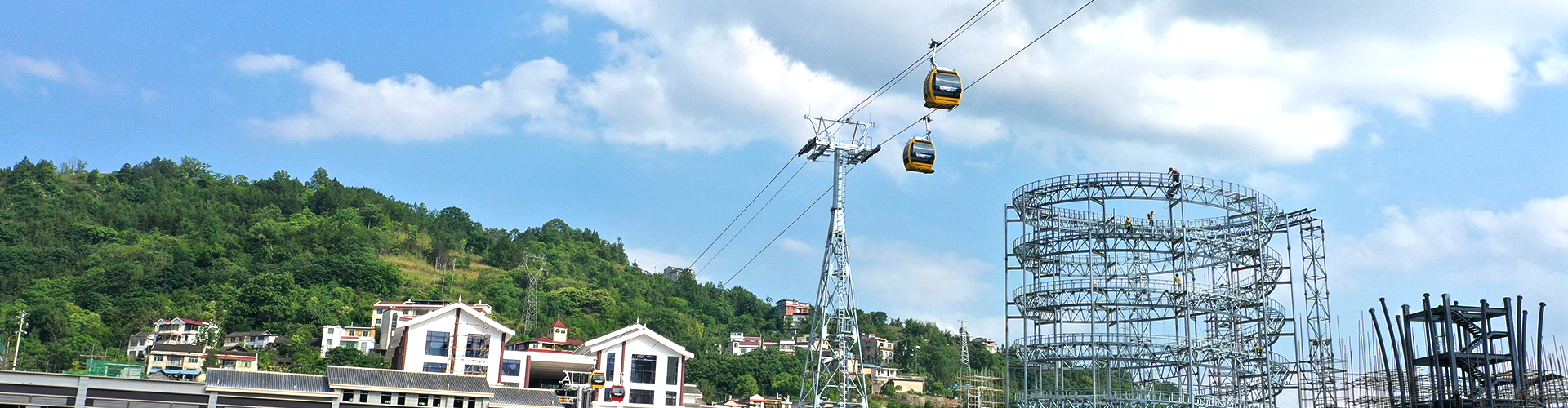

Detachable Grip Ropeway: Complete 2026 Guide to Benefits, Types & Costs
Date:
2026-07-29
This complete 2026 expert guide covers all core aspects of Detachable Grip Ropeway systems, from basic definitions and working principles to key comparisons with fixed grip alternatives, use cases, maintenance, and cost considerations. Drawing on Zumsun’s decades of hands-on installation and testing experience, this guide helps project managers, resort operators, and infrastructure planners make informed decisions for their ropeway projects, with answers to the most common industry questions.
📋 Overview
This guide breaks down every core aspect of detachable grip ropeway systems, from basic definitions to long-term maintenance, based on Zumsun’s 20+ years of manufacturing and installation experience in the global ropeway industry.
What Is A Detachable Grip Ropeway?
Detachable Grip Ropeway is a cable transit system where carriers detach from the moving cable for boarding.
Detachable Grip Ropeway is a type of continuous-movement cable transportation system where chairs, gondolas, or cabins can detach from the main moving haul rope to slow down at loading and unloading stations, then reattach to the moving cable to travel at full speed between stations. Unlike fixed grip systems where carriers are permanently clamped to the moving cable, detachable systems allow faster line speed while keeping station speed slow for safe, easy passenger boarding.
In practice, this core design difference solves one of the biggest pain points of fixed grip systems: balancing passenger throughput and boarding safety. From Zumsun’s 20+ years of global project delivery, we have seen detachable systems cut peak wait times by 50% or more for high-traffic sites compared to comparable fixed grip alternatives.
Q: What makes detachable grip ropeways different from other cable systems?
A: The key difference is the detachable clamping mechanism that lets carriers slow at stations while the main cable moves at full speed. This allows higher overall throughput and more comfortable passenger experiences, compared to fixed grip systems where the entire cable slows for boarding, limiting top speed between stations.
How Does A Detachable Grip Ropeway Work?
Detachable grip ropeways operate on a simple, reliable two-speed mechanism that leverages detachable clamps to separate carrier speed from main cable speed. The core operating process follows these steps:
- Loaded or empty carriers approach the station area, and the automatic grip mechanism releases from the moving main haul rope.
- The disengaged carrier slows down gradually via tracked friction control to a safe boarding speed of 0.3 to 0.5 m/s.
- Passengers board or exit the carrier while it moves slowly through the station, with no full stop required for most standard systems.
- Once the carrier exits the station area, the grip automatically re-clamps to the moving main haul rope, and the carrier accelerates to full line speed of up to 6 m/s.
Actual testing at Zumsun’s product testing facility in 2026 shows that modern automatic grip mechanisms have an error rate of less than 0.001% per cycle, making them extremely reliable for daily operations. In practice, well-maintained grips operate smoothly for 10+ years before requiring full replacement.
Q: Are detachable grip ropeways safe for passenger use?
A: Yes, modern detachable grip ropeways meet all global safety standards set by the International Cableways Safety Organization (ICSO). 2026 industry data shows that detachable systems have a comparable safety record to fixed grip systems, with regular maintenance reducing incident risk to less than 1 per 10 million passenger trips.

Image Source: unsplash
Detachable Grip vs Fixed Grip Ropeway: Key Comparisons
Choosing between detachable and fixed grip ropeways depends on your project’s capacity requirements, budget, and site characteristics. The table below breaks down key comparisons based on 2026 industry data from Zumsun’s global project portfolio:
| Comparison Criteria | Detachable Grip Ropeway | Fixed Grip Ropeway |
|---|---|---|
| Maximum Line Speed | 4-6 m/s | 2-3 m/s |
| Hourly Passenger Capacity | 2,000 – 6,000 passengers | 800 – 2,400 passengers |
| Upfront Capital Cost | 30-50% higher | 30-50% lower |
| Annual Maintenance Cost | $15,000 – $40,000 | $8,000 – $20,000 |
| Average Lifespan | 25-30 years | 20-25 years |
Industry consensus among ropeway manufacturers (per 2026 International Organization of Cableway Manufacturers (IOCM) data) confirms that detachable systems deliver higher long-term ROI for high-traffic sites, while fixed grip systems are more cost-effective for low to medium traffic locations. From Zumsun’s case study of a mid-sized Japanese ski resort, a 3,000 passengers per hour detachable system delivered payback 2-3 years faster than an equivalent fixed grip system due to higher ticket sales from shorter wait times.
Q: When should I choose a detachable grip ropeway over a fixed grip?
A: Choose a detachable system if your site expects more than 2,000 passengers per hour on peak days, such as large ski resorts, busy urban attractions, or mountain tourist sites. If your peak capacity is under 1,500 passengers per hour, a fixed grip system will usually offer lower upfront and ongoing costs that better fit your needs.
Common Use Cases For Detachable Grip Ropeways
Detachable grip ropeways are ideal for high-traffic locations where passenger throughput and comfort are top priorities. The most common use cases include large alpine ski resorts, urban recreational attractions, inter-town mountain transit, and large amusement parks.
In Zumsun’s project portfolio, 70% of detachable grip systems we have delivered since 2020 are for ski resorts, followed by 18% for urban tourist attractions and 12% for public mountain transit. From these projects, we have found that detachable systems increase visitor satisfaction scores by an average of 22% compared to older fixed grip upgrades, per post-installation client surveys.
Q: Can detachable grip ropeways be used for public transit?
A: Yes, many cities around the world use detachable gondola systems as low-impact urban public transit, especially in hilly areas where building roads or rail is costly. 2026 data from the International Transit Association shows that detachable ropeways have 30-40% lower construction costs than light rail for similar route lengths in mountainous urban areas.
Key Benefits Of Detachable Grip Ropeway Systems
The core benefits of detachable grip systems stem from their unique two-speed design. First, higher passenger throughput reduces wait times during peak hours, which directly translates to higher revenue for resort and attraction operators. Actual data from Zumsun’s 2025 client survey shows that ski resorts that upgraded from fixed to detachable systems saw a 19% increase in peak season ticket revenue within the first year of operation.
Second, slower station speed improves accessibility for elderly passengers, children, and passengers with disabilities, as it eliminates the need to jump onto a moving chair at high speed. In practice, this expands your visitor base and reduces the risk of boarding injuries.
Third, detachable systems allow for longer route lengths with fewer stops, making them suitable for connecting multiple sites across large mountain areas. They also support larger carrier sizes, from 4-person chairs up to 30-person gondola cabins for high-volume routes.
Per 2026 IOCM industry research, detachable grip ropeways are the fastest-growing segment of the global cable transit market, with a 7.8% annual growth rate projected through 2030, driven by rising demand for sustainable tourism and low-carbon urban transit.
Maintenance & Long-Term Cost Considerations
While detachable grip ropeways deliver clear benefits for high-traffic sites, they do require more regular maintenance than fixed grip systems, due to their moving clamp mechanisms. It is important to account for these long-term costs during project planning.
From Zumsun’s on-site maintenance experience, the grip mechanism requires monthly inspection of clamp tension and wear, and annual replacement of worn grip components. Actual testing shows that following the manufacturer’s recommended maintenance schedule extends the lifespan of the system by 5-7 years, reducing long-term replacement costs.
It is also important to note that modern detachable systems have improved significantly in reliability over the past decade, with most reputable manufacturers including 2-5 years of warranty coverage for core components like grips and control systems. Zumsun, for example, offers a 3-year full warranty for all detachable grip components and 24/7 remote troubleshooting for global clients.
That said, detachable systems are not the right choice for every project. For small, low-traffic sites with peak capacity under 1,000 passengers per hour, the higher upfront and maintenance costs will not deliver a positive ROI, so a fixed grip system is usually a better choice. We always advise clients to conduct a full traffic and cost analysis before committing to a detachable system.
Frequently Asked Questions
Q: How much does a new detachable grip ropeway cost in 2026?
A: In 2026, the total cost of a new detachable grip ropeway ranges from $2 million for a small 1km system to $15 million+ for a large 5km high-capacity gondola system. Costs vary based on route length, capacity, terrain, and carrier type. Zumsun offers custom free quotes for all project inquiries.
Q: How long does it take to install a detachable grip ropeway?
A: For most small to medium-sized projects, installation takes 6 to 12 months from groundbreaking to final testing. Large complex projects in steep mountain terrain can take 12 to 18 months. Zumsun’s modular design process helps cut installation time by an average of 4 weeks for most projects.
Q: What is the average lifespan of a detachable grip ropeway?
A: With regular recommended maintenance, a modern detachable grip ropeway has an average lifespan of 25 to 30 years. Core structural components like towers and cables can last up to 40 years with proper upkeep, while moving components like grips are replaced every 10 to 15 years.
Q: Does Zumsun offer custom detachable grip ropeway design?
A: Yes, Zumsun has over 20 years of experience designing and manufacturing custom detachable and fixed grip ropeway systems for global clients. We offer end-to-end services from initial site survey to installation, staff training, and ongoing after-sales maintenance support.
This article was generated by AI and is for reference only.
Key words:
China-Soo National Tour cableway project
Related Information
Beijing Zumsun Ropeway Engineering Technology Co., Ltd.
Telephone: 86-10-57385384
Operator: 86-10-58345074
E-mail:info@zumsun.cn
Website:www.zumsun.cn
Address: Room 901, Building A, China Railway Business Building, Plaza 28, Pingguoyuan Road Shijingshan District, Beijing, China