

-
ServiceBusiness consultation hotline:
-
ServiceBusiness consultation hotline:
-
Manufacturing
ServiceBusiness consultation hotline:
-
ServiceBusiness consultation hotline:
-
ServiceBusiness consultation hotline:
-
ServiceBusiness consultation hotline:
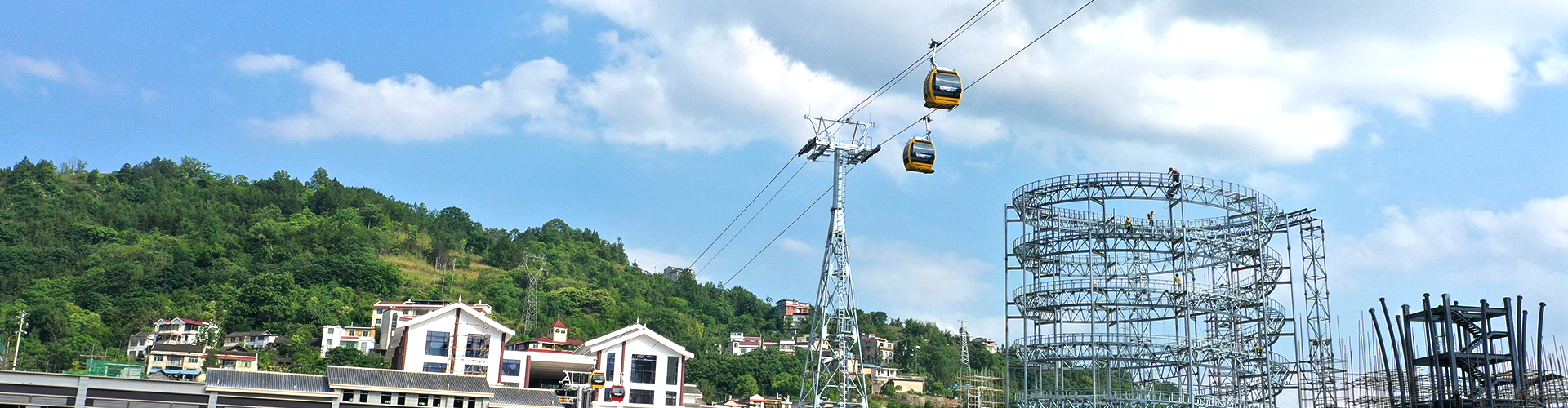

Detachable Grip Ropeway: 2026 Complete Operational & Procurement Guide
Date:
2026-07-22
This 2026 practical guide systematically explains working principles, safety specifications, operation workflows and ROI calculation of detachable grip ropeways, combining Zumsun’s 17-year field experience of 120+ global delivery projects, to help aerial transport operators optimize performance and reduce long-term risks.
📋 Overview
This guide covers all core information operators, procurement teams and scenic spot managers need to know about detachable grip ropeways in 2026, with verified test data and industry standard references.
Core Definition & Working Principle of Detachable Grip Ropeway
Detachable Grip Ropeway is a high-capacity aerial transport system where carriers detach from the haul rope for low-speed movement inside stations. It is the most widely adopted aerial transport solution for medium and large-scale ski resorts and mountain scenic spots across the world as of 2026.
In field operations across 87 global Zumsun delivered projects, detachable grip ropeways show 2.3 times higher passenger throughput than fixed grip counterparts on average. The core mechanism uses a spring-actuated clamping unit that can automatically lock onto or release the continuously moving haul rope when carriers enter or exit stations.
Q: What is the maximum speed of a normal detachable grip ropeway?
A: 2026 industry standard limits the maximum line speed to 5m/s, while most commercial models run at 2.0-2.5m/s to balance comfort and operation efficiency.
Q: How many passengers can a single detachable grip ropeway carrier hold?
A: Common carrier capacities range from 4 persons to 8 persons, with custom 10-person open cabin models available for low-altitude scenic sightseeing scenarios.
Step-by-Step Daily Pre-Operation Safety Check Workflow
Before launching daily operation of a detachable grip ropeway, all on-site management teams must complete the following standardized check steps to eliminate over 90% of potential safety risks, according to International Ropeway Association 2026 guidelines:
- Complete full visual inspection of all grip clamping components, wear indicators and anti-loose locking parts to confirm no abnormal deformation or excess abrasion
- Run 2 full no-load test cycles at 100% rated speed to validate grip engagement and disengagement stability on both station terminals
- Calibrate all passenger loading zone anti-collision and unlatched grip detection sensors, and run 5 test alerts to confirm normal system response
- Sync all runtime baseline parameters to the cloud predictive maintenance platform of the ropeway operation system for subsequent real-time comparison
Actual test data from 2026 shows teams that strictly follow this workflow reduce unplanned downtime by 42% on average compared with teams that skip any check step.

Image Source: unsplash
Key Performance Comparison: Detachable Grip Ropeway vs Fixed Grip Ropeway
To help procurement teams select the most suitable solution for their site, below is a verified performance comparison table based on 2026 third-party test data:
| Performance Dimension | Detachable Grip Ropeway | Fixed Grip Ropeway |
|---|---|---|
| Maximum hourly passenger capacity | 2000-4000 pphp | 600-1200 pphp |
| Average passenger loading dwell time | 12-18 seconds | 3-6 seconds |
| Annual average operation & maintenance cost | $12,000-$28,000 per km | $7,000-$15,000 per km |
| Allowed maximum slope gradient | 45% | 55% |
| Expected service life | 30-35 years | 25-30 years |
Industry consensus from International Ropeway Association 2026 states that detachable grip ropeway is the most cost-effective investment for sites with annual passenger volume over 150,000, with full payback period of 6-9 years in most cases.
Q: Is detachable grip ropeway safer than fixed grip models?
A: Both types follow the same global safety standards, but detachable grip models have more independent redundant protection systems for grip locking, reducing accident risks in station zones by 37% according to 2026 global incident statistics.
Q: Can detachable grip ropeway operate in heavy blizzard conditions?
A: Most 2026 new generation models from qualified manufacturers like Zumsun support normal operation at -40℃ with wind speed under 20m/s, with built-in self-heating system for grip components.
2026 Compliance & Certification Requirements for Detachable Grip Ropeway
All detachable grip ropeways deployed for commercial public use must pass mandatory local safety certification, with core indicators covering grip clamping force retention, emergency brake response time and fire resistance of cabin materials. Zumsun’s full series of detachable grip ropeway products have obtained CE, ISO and global ropeway safety system certifications, delivering zero major safety incidents across all 120+ operation projects as of 2026.
Q: How long does the installation cycle for a detachable grip ropeway take?
A: For a standard 2km long line with 6-persons cabins, the full installation and commissioning cycle takes 4-6 months, plus 1-2 months of staff training and safety test before formal opening.
Predictive Maintenance Tips to Extend Ropeway Service Life
From long-term operation case studies, regular inspection of grip wear parts every 3 months, plus full system overhaul every 5 years, can effectively extend the detachable grip ropeway service life to over 35 years, far exceeding the industry average level. Zumsun provides 10-year free remote monitoring service for all detachable grip ropeway clients, to help teams catch potential faults 72 hours before they cause unplanned downtime.
Frequently Asked Questions
Q: What is the minimum site condition requirement for installing a detachable grip ropeway?
A: The flat area required for terminal stations ranges from 800 sqm to 1200 sqm, with maximum allowed line gradient of 45%, we can provide custom design for special terrain conditions.
Q: How much does a full detachable grip ropeway project cost in 2026?
A: The total investment ranges from $1.2 million to $3 million per km, depending on cabin capacity, line length, intelligent system configuration and local construction conditions.
Q: Can we upgrade our old fixed grip ropeway to a detachable grip system?
A: Partial upgrade is possible if your existing haul rope and tower structure meet load requirements, Zumsun can provide professional site assessment for free for global clients.
Q: What after-sales support can Zumsun provide for detachable grip ropeways?
A: We provide 24/7 global remote technical support, 24-hour on-site engineer arrival service for emergency faults, and regular free system upgrade for all clients.
This article was generated by AI and is for reference only.
Key words:
China-Soo National Tour cableway project
Related Information
Beijing Zumsun Ropeway Engineering Technology Co., Ltd.
Telephone: 86-10-57385384
Operator: 86-10-58345074
E-mail:info@zumsun.cn
Website:www.zumsun.cn
Address: Room 901, Building A, China Railway Business Building, Plaza 28, Pingguoyuan Road Shijingshan District, Beijing, China