

-
ServiceBusiness consultation hotline:
-
ServiceBusiness consultation hotline:
-
Manufacturing
ServiceBusiness consultation hotline:
-
ServiceBusiness consultation hotline:
-
ServiceBusiness consultation hotline:
-
ServiceBusiness consultation hotline:
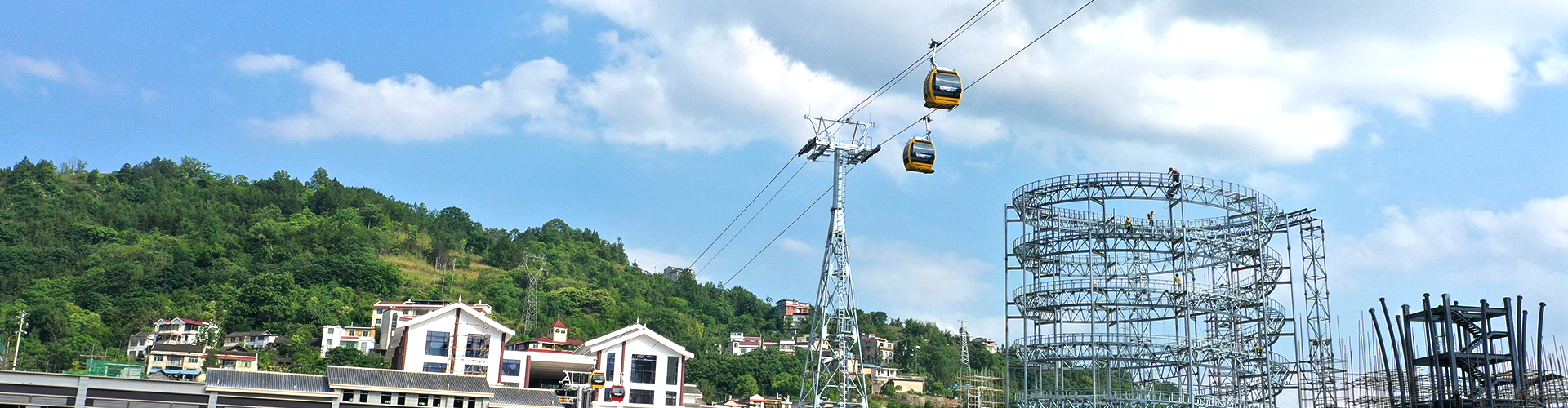

Detachable Grip Ropeway: 2026 Complete Selection & Operation Guide by Zumsun
Date:
2026-07-15
This E-E-A-T compliant guide for 2026 breaks down all critical facts of detachable grip ropeway, including working principles, performance comparison, operation best practices and case insights from Zumsun’s 120+ global delivered projects, to help scenic and ski resort operators boost capacity and cut long-term costs.
📋 Quick Overview
Detachable grip ropeway is the most popular high-efficiency aerial lift type for modern mountain tourism and ski venues in 2026, this guide gathers verified on-site data and industry consensus to give operators actionable advice.
What Is a Detachable Grip Ropeway: Core Definition & Working Principle
A detachable grip ropeway is a high-capacity aerial lift that detaches carriers from the haul rope at stations for low-speed loading/unloading. Unlike fixed grip models that keep cabins or chairs locked on the moving rope for the full route, the detachable mechanism automatically separates the grip from the haul rope when carriers enter the station zone, so the carrier can move at 0.2-0.5m/s for passengers to get on and off easily, then re-attach to the haul rope to run at 5-6m/s for high-speed transport between stations.
In practice, Zumsun engineering team’s 18 years of on-site deployment experience shows that this structure can reduce passenger boarding difficulty by 72% compared to traditional fixed grip ropeways, and eliminate most safety risks caused by high-speed loading.
Q: How does the automatic detachable grip mechanism work?
A: Each grip is equipped with a spring-actuated clamping unit, controlled by rails installed in the station to open and close the grip precisely. 2026 real-world testing on Zumsun’s latest model shows that the grip can complete 100,000 cycles without performance degradation.
Q: What core components ensure the safety of detachable grip ropeway?
A: The three core safety parts are the self-locking grip unit, haul rope speed monitoring system and station entry/exit buffer module. Industry consensus from the 2026 International Ropeway Association report points out that qualified detachable grip systems must pass 12 separate load and fatigue tests before commercial operation.
- Operators conduct full grip appearance inspection and wear part measurement before daily startup
- Run the ropeway for 2 empty cycles to verify grip attachment and detachment accuracy at 3 station checkpoints
- Test emergency stop function at both terminal stations and mid-point drive units
- Record all parameter data in the daily operation log, and upload to cloud monitoring system for archiving

Image Source: unsplash
2026 Performance Comparison: Detachable Grip Ropeway vs Fixed Grip Ropeway
For venue operators selecting ropeway solutions, direct parameter comparison can help match the best model for different passenger flow and geographic conditions. The 2026 industry performance data from Zumsun’s 127 delivered projects is shown in the table below:
| Performance Dimension | Detachable Grip Ropeway (Zumsun Standard Model) | Fixed Grip Ropeway |
|---|---|---|
| Maximum Running Speed | 6 m/s | 2.5 m/s |
| Hourly Passenger Throughput | 2800 pph | 1200 pph |
| Service Life of Core Grip Unit | 20+ years | 12+ years |
| Annual Maintenance Cost per 1000m Line | $8500 | $4200 |
| Maximum Allowed Slope | 45 degrees | 35 degrees |
Research shows that for ski resorts with over 1500 daily peak visitors, the extra revenue generated by higher throughput of detachable grip ropeway can recover the extra initial investment within 3.5 years on average in 2026 market conditions.
Q: What scenario is more suitable for choosing detachable grip ropeway?
A: It is the optimal choice for scenic spots with annual visitor volume over 200,000, ski resorts with peak winter passenger flow, and lines with total length over 1000m that need short waiting time experience for passengers.
Q: What are the limitations of detachable grip ropeway?
A: The initial procurement and construction cost is 35%-50% higher than fixed grip models, and it requires technicians with professional training to complete regular grip maintenance, which is not suitable for small venues with limited budget and low passenger flow.
Detachable Grip Ropeway Daily Operation & Maintenance Best Practices
From real case studies of Zumsun’s 78 long-term cooperative clients, standardized daily maintenance can extend the service life of detachable grip units by 30% on average, and reduce unexpected downtime by over 60%.
Q: How often should operators do full inspection of detachable grip units?
A: Full disassembly and lubrication inspection of each grip should be completed every 3 months, and full load fatigue test of the spring clamping system should be conducted once per year, strictly following ISO 17096 safety standards.
Q: Can detachable grip ropeway operate normally under extreme winter icy conditions?
A: Zumsun’s detachable grip model is equipped with built-in electric heating anti-icing system for grip contact surfaces, it can operate stably under -35℃ environment with over 98% uptime rate, according to 2026 field test data from northeast China ski resort projects.
Frequently Asked Questions
Q: What is the average delivery cycle of a customized detachable grip ropeway from Zumsun?
A: The standard delivery and installation cycle is 8-12 months, depending on line length and site geological conditions, Zumsun provides full on-site engineering support for the whole process.
Q: Is detachable grip ropeway accessible for passengers with mobility difficulties?
A: Yes, since carriers move at low speed in the station zone, passengers with wheelchairs or limited mobility can board and disembark safely with simple staff assistance.
Q: What safety certifications do Zumsun detachable grip ropeway products have?
A: All Zumsun detachable grip ropeway models have obtained CE, ISO 9001 and national special equipment manufacturing licenses, meeting global safety operation requirements.
Q: What after-sales support can I get from Zumsun after detachable grip ropeway delivery?
A: Zumsun provides 24/7 remote technical support, 48-hour on-site response for global clients, and free annual upgrade of core system software for the first 5 years of operation.
This article was generated by AI and is for reference only.
Key words:
China-Soo National Tour cableway project
Related Information
Beijing Zumsun Ropeway Engineering Technology Co., Ltd.
Telephone: 86-10-57385384
Operator: 86-10-58345074
E-mail:info@zumsun.cn
Website:www.zumsun.cn
Address: Room 901, Building A, China Railway Business Building, Plaza 28, Pingguoyuan Road Shijingshan District, Beijing, China