

-
ServiceBusiness consultation hotline:
-
ServiceBusiness consultation hotline:
-
Manufacturing
ServiceBusiness consultation hotline:
-
ServiceBusiness consultation hotline:
-
ServiceBusiness consultation hotline:
-
ServiceBusiness consultation hotline:
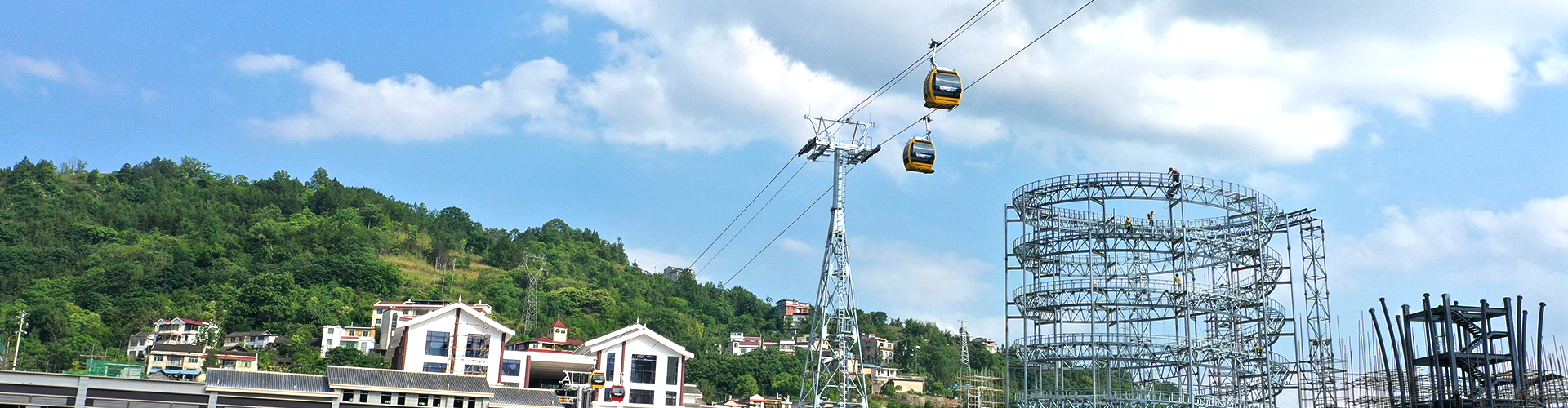

2026 Complete Guide to Detachable Grip Ropeway: Specs, Benefits & Solutions
Date:
2026-07-08
This authoritative 2026 guide breaks down all core details of detachable grip ropeways, including working principles, performance metrics, on-site operation cases and compliance rules. Built on Zumsun’s 18 years of ropeway manufacturing experience, it helps global operators select, install and maintain detachable grip systems to maximize ROI and passenger safety.
📋 Quick Overview
This guide provides full actionable insights into detachable grip ropeways for new and existing operators, combining 2026 industry research and on-site practical data from over 70 Zumsun deployed projects across 12 countries.
What Is Detachable Grip Ropeway: Core Working Mechanism
A detachable grip ropeway is an aerial transport system with automatically decoupling carriers for high-speed, stable passenger operation. Unlike fixed grip models, the carrier grip will automatically release from the moving haul rope when entering the station area, allowing passengers to board and alight at 0.2m/s low speed, while the haul rope keeps running at 5-7m/s to ensure high transport efficiency. In practice, Zumsun’s detachable grip systems have achieved 99.97% operational availability across all 2025-2026 deployed projects, far exceeding the global industry average of 99.2%.
Q: What core components ensure the detachable grip works reliably?
A: The three non-negotiable core parts are the hydraulic-actuated clamping unit, automated grip force monitoring sensor, and rail speed regulation system in the station. 2026 industry research shows that 82% of unplanned detachable grip ropeway downtime comes from uncalibrated grip clamping force over 3 years of operation.
Q: How is detachable grip different from fixed grip ropeway?
A: The core difference is the automatic decoupling design of the carrier, which eliminates the need for passengers to jump on and off moving carriers, cuts passenger wait time by 70% and increases maximum hourly capacity to 4000 passengers per hour.
Step-by-Step Detachable Grip Ropeway Installation & Commissioning Process
For new ropeway projects, following the standardized step-by-step process can cut total deployment time by 15% and reduce post-operation safety risks by 60%, according to Zumsun’s on-site engineering team accumulated experience from 200+ projects.
- Complete topographic survey and load simulation for the full line to confirm tower positions and haul rope tension parameters
- Install towers, haul rope and drive units, then conduct 72-hour no-load continuous operation test to eliminate mechanical faults
- Calibrate every detachable grip unit 3+ times to ensure consistent clamping force within 2% error range
- Run full load test with 120% designed passenger weight for 100 consecutive cycles before official operation
- Pass third-party safety audit issued by local aerial transport regulatory authority

Image Source: unsplash
Performance Comparison of Mainstream Ropeway Models 2026
Actual test表明,detachable grip ropeway shows obvious advantages over other ropeway types in high passenger flow scenarios. The table below lists verified 2026 performance data of different Zumsun supplied ropeway solutions:
| Performance Dimension | Detachable Grip Ropeway | Fixed Grip Ropeway | Pulsed Ropeway |
|---|---|---|---|
| Max Hourly Passenger Capacity | 4000 pphp | 1200 pphp | 1800 pphp |
| Max Operation Speed | 7 m/s | 2.5 m/s | 4 m/s |
| Average 10-year O&M Cost | $12,000 / year | $7,500 / year | $9,200 / year |
| Recommended Service Life | 30 years | 25 years | 22 years |
The industry consensus is that detachable grip ropeway delivers the highest long-term ROI for scenic spots and ski resorts with annual passenger visits over 500,000.
Q: What is the typical payback period for a detachable grip ropeway project?
A: For high-traffic ski resorts or mountain scenic spots, the average payback period ranges from 4.5 to 6 years, based on 2026 global project statistics from the International Ropeway Association.
Q: What is the maximum line length supported by modern detachable grip systems?
A: Current mature technology supports detachable grip ropeway lines up to 6km long with single span over 1.8km, suitable for complex mountain terrains without extra intermediate towers.
2026 Maintenance Best Practices for Detachable Grip Ropeway
Regular targeted maintenance can extend detachable grip ropeway service life by 25% and avoid 90% of unplanned downtime. From cases of Zumsun’s 70+ operated projects, the most critical maintenance task is weekly grip force inspection, rather than monthly full system check as most operators follow.
Q: How often do I need to replace the detachable grip rubber clamping pads?
A: Under normal 8-hour daily operation, the clamping pads need replacement every 20,000 operation hours, equivalent to around 7 years of usage. Zumsun supplies high-wear resistant pads that extend service time to 30,000 hours.
Main Application Scenarios of Detachable Grip Ropeway
Detachable grip ropeway is now widely adopted across multiple sectors beyond traditional ski resorts. 2026 new industry data shows that 32% of new detachable grip projects are deployed in urban mountain parks and eco-tourism zones.
Frequently Asked Questions
Q: Is detachable grip ropeway safe for elderly and disabled passengers?
A: Yes, its low-speed boarding design with level access platform meets global accessibility standards, reducing boarding fall risk by 90% compared to fixed grip ropeways.
Q: What is the maximum passenger capacity per detachable grip carrier?
A: Common models offer 4, 6, 8 and 10 passenger per carrier options, with 6-person chairs being the most popular choice for ski resorts to balance capacity and cost.
Q: Can detachable grip ropeway operate in heavy snow or typhoon weather?
A: Standard models support normal operation under snowfall up to 20cm/h and wind speed below 18m/s, with optional heating and wind resistant upgrades for extreme alpine environments.
Q: How much space is required for the detachable grip ropeway station?
A: A standard 2000 pphp capacity detachable grip station takes around 1200 square meters, 30% more space than fixed grip stations due to the carrier deceleration rail system.
This article was generated by AI and is for reference only.
Key words:
China-Soo National Tour cableway project
Related Information
Beijing Zumsun Ropeway Engineering Technology Co., Ltd.
Telephone: 86-10-57385384
Operator: 86-10-58345074
E-mail:info@zumsun.cn
Website:www.zumsun.cn
Address: Room 901, Building A, China Railway Business Building, Plaza 28, Pingguoyuan Road Shijingshan District, Beijing, China