

-
ServiceBusiness consultation hotline:
-
ServiceBusiness consultation hotline:
-
Manufacturing
ServiceBusiness consultation hotline:
-
ServiceBusiness consultation hotline:
-
ServiceBusiness consultation hotline:
-
ServiceBusiness consultation hotline:
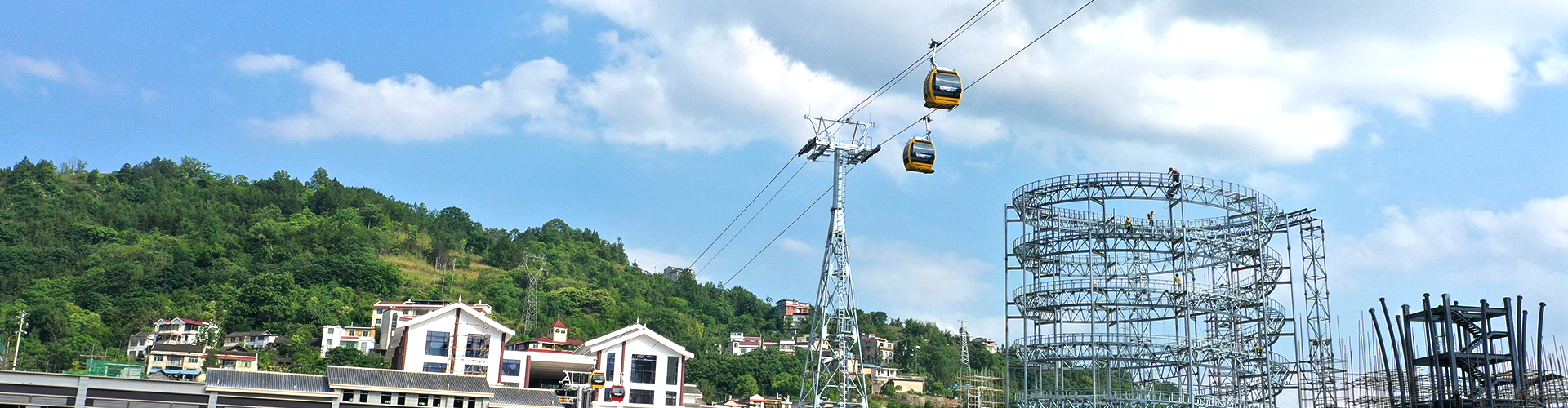

Exploring Industry Cases and Future Prospects of Pulsating Circulating Aerial Ropeways
Date:
2025-09-25
This article explores successful case studies of pulsating-loop cableway manufacturers across various industries, as well as future development trends.
Introduction
In modern urban transportation and tourism, pulse-style circulating cable cars are gradually emerging as a popular solution. As a safe and environmentally friendly mode of transport, they not only enhance the city's traffic efficiency but also offer visitors a unique sightseeing experience.
What is a pulsating circulating aerial ropeway?
The pulsating circulating cableway is a transportation system that uses steel cables to suspend passenger cabins in mid-air, enabling them to move continuously in a circular motion via mechanical devices. Compared to traditional cableways, it offers smoother operation, as well as significantly improved safety and comfort.
Industry Case Analysis
1. Applications for Tourist Attractions
Many tourist destinations have already begun introducing pulse-style circulating cable cars. For instance, a mountainous scenic area successfully attracted a large number of visitors by building this type of cable car system. Travelers can enjoy breathtaking views of the stunning natural landscapes from above, while also helping to alleviate ground-level traffic congestion and savoring a truly unique experience.
2. Innovation in Urban Public Transportation
In some cities, pulsating-loop cable cars are also used as a complement to public transportation, especially in areas with complex terrain and heavy traffic. By connecting major transit hubs with remote regions, they significantly enhance residents' convenience for getting around.
The Development Prospects of Manufacturers of Pulsating Circulation Aerial Ropeways
As urbanization accelerates and environmental awareness grows, manufacturers of pulsating circulating aerial ropeways are embracing new opportunities for development. Moving forward, these manufacturers will continue to focus on technological innovation, enhancing both the efficiency and comfort of their products to meet the ever-expanding demands of the market.
Summary
As a modern transportation solution that combines efficient transit, environmental friendliness, and exceptional adaptability to diverse landscapes, the pulse-type circulating cableway has earned widespread recognition. Its manufacturers have accumulated numerous successful case studies across various industries, vividly demonstrating the technology's remarkable flexibility and practicality. In the tourism sector, a renowned cableway manufacturer designed a dual-line circulating system for Zhangjiajie Tianmen Mountain, seamlessly integrating precise slope control and optimized passenger capacity. This innovative system not only ensures the safe and rapid transport of tens of thousands of visitors daily but also harmoniously blends with the stunning karst landscape, setting a benchmark for the integration of culture and tourism. Meanwhile, in industrial logistics, a leading German company customized a corrosion-resistant pulse-type cableway specifically for a Brazilian iron ore project. Utilizing advanced alloy materials and a modular design, this system delivers continuous and reliable transportation of ore from extraction sites directly to processing plants—even in the challenging tropical rainforest environment, where annual rainfall exceeds 2,000 millimeters. Compared to traditional truck-based transportation, this cutting-edge solution boosts efficiency by 40% while slashing carbon emissions by an impressive 65%. As global efforts to achieve sustainable development goals gain momentum, the pulse-type circulating cableway industry is entering a pivotal phase of strategic transformation. At the policy level, the EU’s “Green New Deal” explicitly includes cableway systems in urban low-carbon mobility plans, mandating that all new projects by 2030 must rely entirely on renewable energy sources. Meanwhile, at the technological front, the convergence of 5G communication and AI-driven dispatch systems has elevated operational precision to millimeter-level accuracy, reducing fault-prevention response times to under 3 seconds. On the market front, emerging economies in Southeast Asia are experiencing a surge in demand for mountainous urban transportation solutions, projected to create a cableway market worth over $8 billion by 2025. Yet, despite these promising opportunities, challenges persist—ranging from imperfections in standardization frameworks and shortages of interdisciplinary talent to the need for enhanced resilience against extreme climatic conditions. According to a recent survey conducted by the International Cable Car Association, 73% of global manufacturers are ramping up R&D investments, focusing intently on breakthroughs in key areas such as hydrogen-powered propulsion, lightweight composite materials, and intelligent obstacle-avoidance technologies. These advancements are paving the way for a more robust and adaptable industry ecosystem. Driven simultaneously by technological innovation and expanding market opportunities, the pulse-type circulating cableway is poised to play an increasingly vital role in reshaping global transportation systems—and beyond.
Key words:
China-Soo National Tour cableway project
Related Information
Beijing Zumsun Ropeway Engineering Technology Co., Ltd.
Telephone: 86-10-57385384
Operator: 86-10-58345074
E-mail:info@zumsun.cn
Website:www.zumsun.cn
Address: Room 901, Building A, China Railway Business Building, Plaza 28, Pingguoyuan Road Shijingshan District, Beijing, China