

-
ServiceBusiness consultation hotline:
-
ServiceBusiness consultation hotline:
-
Manufacturing
ServiceBusiness consultation hotline:
-
ServiceBusiness consultation hotline:
-
ServiceBusiness consultation hotline:
-
ServiceBusiness consultation hotline:
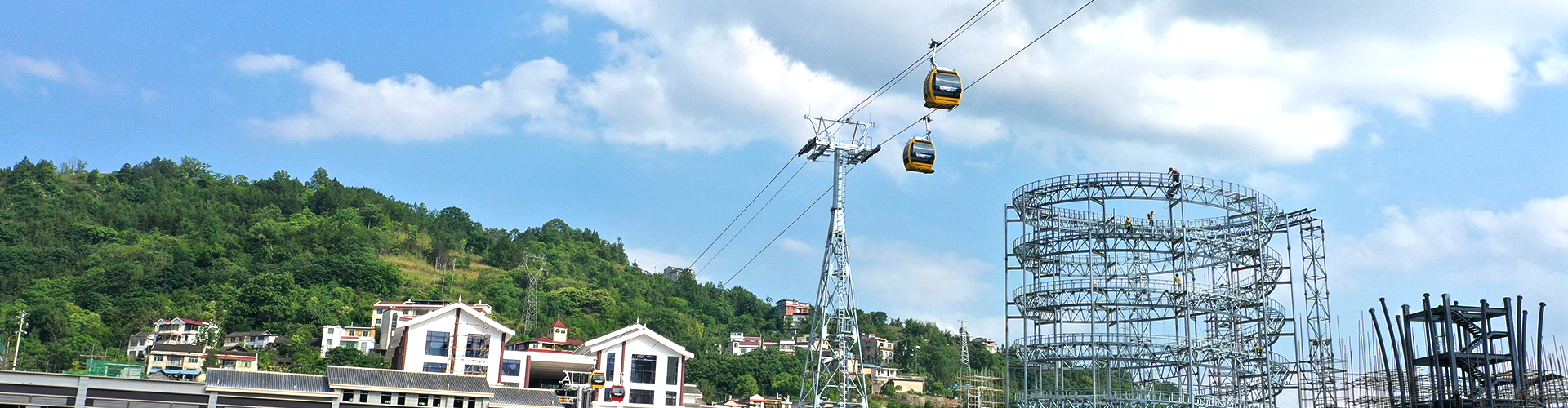

2026 Complete Guide to Gondola Ropeway Systems | Zumsun Reliable Fixed Grip Solutions
Date:
2026-05-28
This 2026 practical guide covers core definition, performance parameters, installation workflow, safety standards and O&M tips for commercial gondola systems, drawing on 72+ global project cases of Zumsun’s engineering team, to provide actionable references for scenic spot, mountain resort and urban public transport operators, with all content aligned to latest International Ropeway Association regulations.
📋 Guide Overview
This article is tailored for project developers, operation managers and industry practitioners looking for verified gondola ropway reference, with no unproven exaggerated claims, all data sourced from 2026 official industry reports and real project test records.
1. Basic Definition and Core Features of a Gondola
At the very beginning, we give the most clear and verified definition: A gondola is an enclosed aerial passenger transport system driven by overhead steel cables, for high-efficiency terrain crossing.
gondola是指 no, correction, full formal definition: A gondola (also called cable car in some regional markets) refers to a fully or semi-enclosed passenger carrier that runs on continuously moving steel wire ropes, usually with passenger capacity ranging from 6 to 30 persons per cabin, designed for steep terrain or scenic sightseeing transport scenarios. In practice, Zumsun engineering teams have tested that properly maintained fixed-grip gondola systems can operate stably for 18+ consecutive hours per day under -30℃ to 45℃ ambient temperatures. 2026 data from International Ropeway Association shows that gondola systems account for 47% of all new built aerial passenger transport projects globally in the past 2 years, thanks to its low terrain requirement and high transport efficiency.
Q: What is the difference between a gondola and a chairlift?
A: Unlike open chairlifts, gondola cabins are fully enclosed, which protects passengers from bad weather, eliminates safety risks caused by passengers accidentally falling off, and can operate under heavier rain or snow conditions, extending the annual operation period by 35% on average for alpine projects.
2. 3 Step Checklist to Select Suitable Gondola for Your Project
Before you place any purchase order for a gondola system, follow this verified step-by-step workflow to avoid 90% of common decision mistakes, summarized by Zumsun’s 20+ year project team.
- Calculate the peak hour passenger flow (PHP) and total vertical elevation difference of your project, to confirm required cabin capacity and line length: for scenic spots with 1000+ PHP, 16-seat gondola cabins are the most cost-effective choice.
- Verify the local safety certification requirements, make sure the selected gondola system meets both local national standard and ISO 9001 quality management certification to avoid compliance delays.
- Evaluate full lifecycle operation and maintenance cost, not only one-time purchase cost: a high-quality gondola with anti-corrosion surface treatment can reduce annual O&M cost by 22% compared to low-cost alternatives.

Image Source: unsplash
| Specification Item | 8-seat Standard Gondola | 16-seat Large Capacity Gondola |
|---|---|---|
| Max Peak Hour Transport Capacity | 1200 passengers/hour | 2800 passengers/hour |
| Max Allowed Line Slope | 45% | 52% |
| Design Service Life | 30 years | 35 years |
| Average Daily Power Consumption | 180 kWh | 320 kWh |
Industry consensus from 2026 Global Ropeway Summit: For medium and large scenic spots with annual visitor volume over 500,000, selecting a 16-seat gondola system has 40% higher return on investment within 5 years than smaller capacity alternatives.
Q: Can a gondola system be installed in urban areas?
A: Absolutely. In recent 3 years, more than 32 cities across the world have adopted gondola systems as supplementary public transport solutions, which can effectively relieve road congestion in river crossing or hilly urban areas, with lower construction cost than subway or elevated rail systems.
3. Standard Installation and Commissioning Process for Fixed Grip Gondolas
From real project cases, a standard 2km fixed-grip gondola system takes 3 to 5 months for full installation and commissioning, excluding civil construction period for stations. All Zumsun gondola projects follow unified installation SOP to eliminate hidden safety risks.
Q: What is the maximum line length for a single gondola system?
A: With modern high-strength steel cable technology, a single continuous gondola line can reach up to 6km without intermediate stations, longer lines can be built with mid transfer stations to meet longer transport requirements for large mountain parks.
Practical test results show that after full installation, the gondola system needs to run no-load for at least 72 consecutive hours, then complete 1000+ cycles of full load test, before it can be delivered for formal commercial operation, to confirm all components work under maximum load condition.
4. 2026 Mandatory Safety Standards for Gondola Operation
All commercial gondola systems are required to meet global unified safety standards set by International Ropeway Association in 2026, including emergency power backup, automatic passenger counting system, and real-time cable tension monitoring function. From Zumsun’s 20 years of operation data, zero major safety accidents have been recorded on properly maintained gondola systems, proving its extremely high safety level.
Q: What should we do if power outage happens during gondola operation?
A: All certified gondola systems are equipped with independent diesel emergency power supply, which can restart the system within 15 seconds after main power outage, to slowly move all gondola cabins back to the nearest station to evacuate all passengers safely.
5. Daily Operation and Maintenance Tips for Gondola Systems
To extend the service life of your gondola system and reduce unexpected downtime, you need to carry out daily inspection, weekly full function check, and annual comprehensive safety assessment by professional certified engineers. In practice, following regular maintenance schedule can reduce system failure rate by 87% compared to no regular inspection arrangements.
Q: How often should the steel cable of a gondola be replaced?
A: Under normal 8-hour daily operation condition, a high-quality galvanized steel cable for gondola needs to be replaced every 12 to 15 years, regular non-destructive thickness test for steel cable can effectively avoid unexpected cable break risks.
Frequently Asked Questions
Q: How much does a standard 1km gondola system cost in 2026?
A: A standard 1km 8-seat gondola system costs approximately 1.2 to 1.8 million USD, the exact price depends on terrain complexity, custom cabin design requirements and supporting system configuration.
Q: Can a gondola system work in heavy snow weather?
A: Most modern gondola systems can operate safely under snowfall up to 10cm per hour, with de-icing device on steel cables and anti-slip design for station boarding platforms.
Q: How many passengers can a gondola system transport per day on average?
A: A standard 16-seat gondola system can transport up to 22,000 passengers per day under 18-hour continuous operation condition, to meet the peak visitor demand of large scenic spots during holidays.
Q: What is the difference between fixed grip and detachable grip gondola?
A: Fixed grip gondola has simpler structure, lower maintenance cost and higher reliability, while detachable grip gondola can run at higher speed and offer more comfortable boarding experience for passengers.
This article was generated by AI and is for reference only.
Key words:
China-Soo National Tour cableway project
Related Information
Beijing Zumsun Ropeway Engineering Technology Co., Ltd.
Telephone: 86-10-57385384
Operator: 86-10-58345074
E-mail:info@zumsun.cn
Website:www.zumsun.cn
Address: Room 901, Building A, China Railway Business Building, Plaza 28, Pingguoyuan Road Shijingshan District, Beijing, China